Anúncios
A dog adoption home check is less about presenting a perfect house and more about helping a rescue understand whether your day-to-day life can meet one particular dog’s needs. Be clear about your home, the people in it, your routine and the support you can offer. That information helps the rescue make a safer, more lasting match.
You stay on this website. No payment required.
The exact process varies between charities and dogs. Some rescues use a detailed form and follow-up conversation; some may arrange a visit or ask further questions. A check is not a generic pass-or-fail test. It is an opportunity to explain your circumstances honestly and to learn whether the dog’s exercise, training and settling-in needs are realistic for your household.
On this page
Why rescues ask about your home and routine
Rescues commonly build a picture of both the dog and the potential adopter before deciding whether to proceed. Dogs Trust says it reviews an application with the dogs in its care in mind, while Woodgreen explains that it considers lifestyle, the home environment and other pets. This matching approach means a flat, a garden, children or a busy neighbourhood are pieces of context, not automatic verdicts.
Topics you may be asked to explain
- Housing permission If you rent or share a home, confirm that you are allowed to keep a dog before you reserve or apply.
- Daily time Describe work, travel, exercise, toilet-break and companionship arrangements rather than guessing what you may be able to change later.
- Household fit Mention children, regular visitors and resident pets so the rescue can consider the dog’s individual needs.
- Outdoor arrangements Explain the outside space available and how you would provide exercise and toilet breaks; a garden may matter for some dogs but is not the only factor.
What a home visit can involve
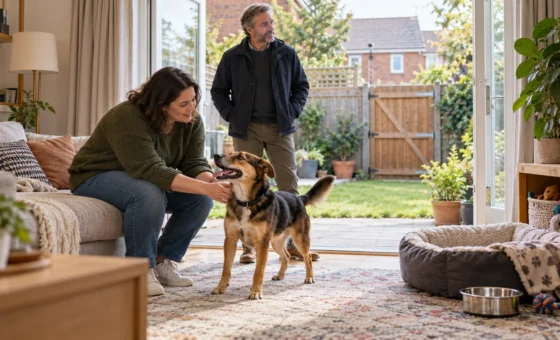
A home visit is not used by every organisation or for every applicant. Dogs Trust says it may arrange one to see how the house will be set up and, where relevant, whether the garden is secure. If a visit is proposed, prepare practical answers: where the dog will rest, how doors and gates are managed, who takes responsibility for care, and how you will introduce the dog to the household.
Avoid trying to tailor your answers to an imagined checklist. A rescue can only make a useful recommendation when it knows the real limits of your routine and space. If a particular dog is not suitable, that does not necessarily mean you cannot adopt; it may mean a different dog, timing or support plan is a better fit.
Use the next guide to organise the details before you speak to a rescue. It sets out a simple preparation sequence and points you to an official UK rescue process when you are ready to apply.
Frequently asked questions
Does every dog adoption include a home visit?
No. Processes differ by rescue and by the dog. Dogs Trust says it may arrange a home visit, so treat one as possible rather than guaranteed and check the charity’s current process.
Can I adopt a dog if I live in a flat?
It depends on the dog and the arrangements you can offer. Woodgreen says it considers individual circumstances and has rehomed dogs with people living in flats or without a garden.
What should I have ready for a rescue application?
Prepare an accurate description of your home, household, routine, other pets, housing permission and how you would meet exercise, toilet-break, training and settling-in needs.